Aura Bubbles
Blast 2 Fun GamesArcade
4.2321.00 Reviews
- Version
- 9.3
- Installs
- 10.00M
- Age Rating
- Everyone
Screenshots
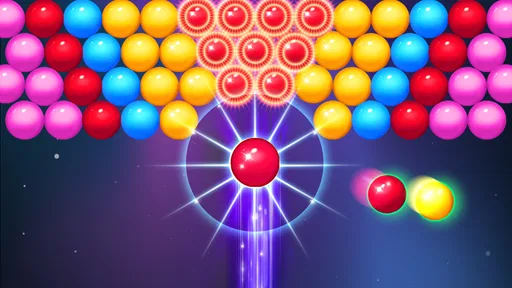
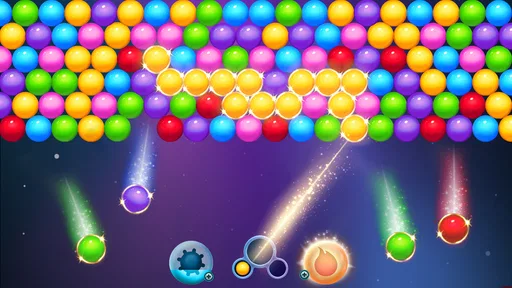
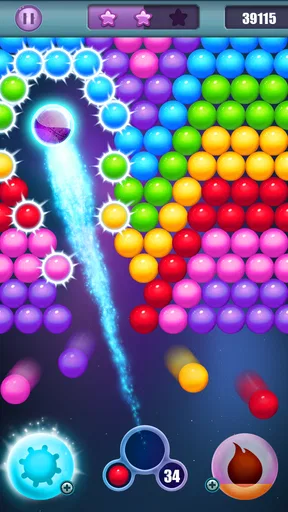
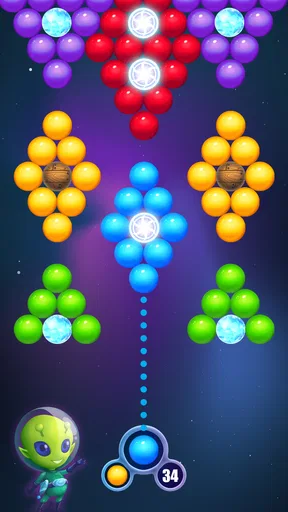
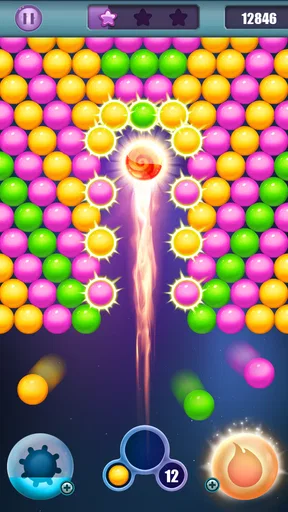
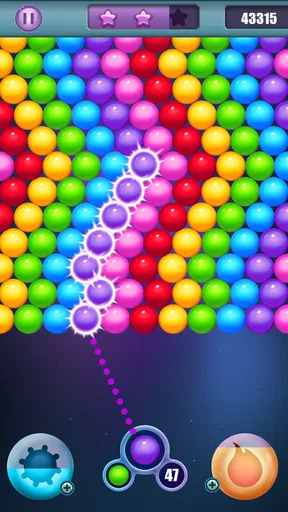
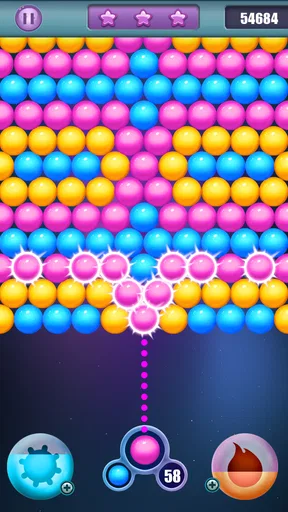
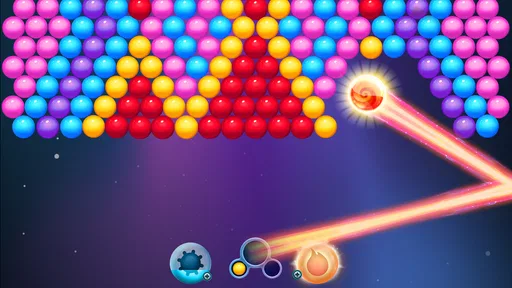
Our Review of Aura Bubbles
 Analysis by Appyee
I approached Aura Bubbles as the kind of game you open when you want a quick arcade break rather than a long, demanding session. Its basic idea is easy to understand: pop colorful aura bubbles, clear groups of balls, and move through space-themed levels. That simplicity is its biggest invitation. You can start playing without learning a complicated control system, yet the arrangement of bubbles gives each shot a little more thought than a random tap.
My first impression was that it aims for immediate accessibility. The game is free to download, carries an Everyone age rating, and runs on Android devices using version 5.0 or later. That makes it a practical choice for a shared family tablet, an older spare phone, or anyone who prefers an arcade game with a gentle entry point. It is developed by Blast 2 Fun Games and sits firmly in the casual arcade space, where short rounds and quick decisions matter more than a large story or a complex character system.
What to expect before your first level
The most useful way to think about Aura Bubbles is as a bubble-popping game with a space presentation. You are not downloading a role-playing adventure or a physics sandbox. The appeal comes from looking at the arrangement in front of you, identifying a useful target, and making a shot that improves the board instead of merely removing one bubble.
That distinction matters for new players. At first, it is tempting to fire at the most obvious group immediately. I found that a better habit is to spend a brief moment checking what sits above and around the target. A move that clears a small cluster may also release a larger section, while an impulsive shot can leave awkward pieces behind. The game is approachable, but the most satisfying progress comes from treating each move as a small puzzle.
The space setting gives the presentation a playful identity without making the game difficult to understand. The central loop remains readable, which is helpful when you are playing with one hand or returning after a few days away. I would recommend it to someone who likes familiar bubble mechanics but wants a lighter, more colorful atmosphere than a plain board game.
It is also worth setting expectations about depth. This is best suited to people who enjoy repeated arcade challenges, not players searching for extensive exploration, dialogue, or a competitive multiplayer experience. If you want a game that can fill a few spare minutes while waiting for an appointment, it makes sense. If you need a large progression system that constantly changes its rules, the straightforward structure may feel limited.
The numbers surrounding the game suggest that it has found a broad audience: it has an average rating of 4.2 from around 34 thousand ratings and has passed 10 million installs. Those figures do not replace personal taste, but they do fit my impression that the game is designed to be quickly understood by a wide range of players rather than aimed at a narrow arcade audience.
Installing it without overthinking the choice
Because the game is free, the initial decision is relatively low risk. The part I would pay attention to is not the download price but the optional in-app purchase range, which runs from $0.99 to $104.99 per item. That is a wide range, so I would treat the free installation as an opportunity to test the core loop before spending anything.
For a child using a family device, I would also make sure purchase controls are handled before handing over the phone. The Everyone rating makes the game approachable from an age perspective, but an age rating does not mean every payment decision should be left unattended. I found the sensible approach is to play several levels first, decide whether the basic experience is enjoyable, and only then consider whether any optional purchase would genuinely improve your routine.
The current version is 9.3, and the minimum Android requirement is 5.0. In practical terms, that broad compatibility is useful if you are installing the game on an older Android device rather than a recent flagship. I would still keep enough free storage for a comfortable installation and close unrelated apps if your phone is modest, but the listed operating-system requirement itself is not demanding.
Getting through the first setup and first success
Once the game opens, I suggest resisting the urge to rush through the first playable screen. The opening moments are the best time to understand how the aiming line behaves, how a shot attaches to the bubble field, and what the game considers a successful clear. Those details become automatic quickly, but learning them deliberately makes the first meaningful win less frustrating.
My preferred first-session routine is simple. I look at the entire visible arrangement, identify the largest reachable color group, and then check whether removing it creates a route into the structure above. If the obvious group does not improve the board, I choose a safer shot that keeps future options open. This is more reliable than trying to maximize every move immediately.
The first real success is not the fastest shot; it is the shot that leaves you with more useful choices afterward. That is the small change in mindset that helped me enjoy the game. A clean opening can feel rewarding, but preserving a good angle for the next move is often more important than clearing one extra bubble now.
New players may wonder whether they need perfect accuracy from the beginning. In my experience, no. The game works better when you use the early levels to learn its rhythm. Aim with a purpose, watch how the board responds, and accept that a few inefficient moves are part of learning. The accessible design means you can build confidence without needing a guide beside you.
One practical tip is to avoid staring only at the lowest visible row. In bubble games, the lower section is often the easiest place to act, but the upper structure determines whether the board will open or remain cluttered. Before committing, I scan upward and ask which group is supporting the most material. Even when the game looks simple, that wider view can turn a routine shot into a much stronger one.
How I decide whether a shot is worth taking
I use a three-step check. First, I find a group that can be reached cleanly. Second, I look for nearby pieces that may become unsupported after the shot. Third, I consider the next likely color or position rather than assuming the current move is the whole turn. This approach is especially helpful when the board becomes crowded and several targets look equally attractive.
Another useful habit is to separate progress from spectacle. A large-looking cluster is not automatically the best target if it leaves isolated bubbles in difficult positions. Sometimes a smaller, less dramatic move produces a cleaner board. That trade-off is easy to miss when the visual effects draw attention to the biggest group.
I would also recommend playing with a steady pace. There is no advantage in tapping quickly just because the game feels casual. Taking a second to inspect the arrangement reduces accidental shots and makes the experience calmer. For a first-time user, that pause is the difference between feeling that the game is random and realizing that the board rewards planning.
Common points of confusion during play
The most likely confusion for a beginner is understanding why a seemingly good pop does not solve the whole board. The answer is that clearing one area is only part of the objective. Remaining pieces can still create a difficult shape, and a move that looks productive may not improve the next position. I found it helpful to judge a shot by the board it creates, not just by the bubbles it removes.
Another point of friction is the difference between an available move and a useful move. The game lets you act quickly, but that does not mean every legal shot deserves to be taken immediately. If you are stuck, stop looking for the most colorful group and look for the move that changes the structure. That may mean opening a path, removing a support point, or preserving a better angle.
Players coming from very fast arcade games may initially find the pace more deliberate than expected. The space theme suggests constant action, but the satisfying part is often the short pause before firing. I consider that a strength for casual puzzle fans, though it may disappoint someone who wants nonstop reflex testing.
The free-to-play structure is another area where expectations matter. Since optional purchases range from small amounts to considerably larger individual items, I would not assume that every available offer is necessary for normal enjoyment. My advice is to treat purchases as optional conveniences and judge the game by what it gives you without paying. If the unpaid loop already feels repetitive, spending more is unlikely to solve that underlying issue.
Some users may also ask whether it is suitable for children. The Everyone rating makes it broadly appropriate from the listed content perspective, and the controls are simple enough for a young player to understand. Still, I would supervise purchases on a shared device and explain that free installation does not mean every optional item is free. That conversation is more useful than relying on the age label alone.
People with older Android phones may wonder whether the game is a sensible test for their device. The minimum requirement of Android 5.0 is reassuring for compatibility, but actual comfort can still depend on the condition of the phone and what else is running. I would install it, try a few levels, and pay attention to responsiveness rather than assuming that an older device will perform exactly like a newer one.
Where it fits beside other arcade choices
Compared with a pure reflex game, Aura Bubbles gives me more time to think and less pressure to react instantly. That makes it a better fit for a commute, a quiet break, or a short session before bed. Compared with a deep puzzle game, it is easier to enter and less mentally demanding, but it also offers less variety for players who want elaborate rules and long-term mastery.
It occupies a useful middle ground between mindless tapping and serious puzzle planning. I can play casually, but I still feel rewarded when I spot a better sequence. That balance is its main reason to choose it over a generic arcade distraction. On the other hand, someone who prefers direct competition, narrative progression, or highly varied challenges may be happier with another category entirely.
The game is especially suitable for players who enjoy visual matching, gradual board clearing, and repeatable levels. It is less convincing for someone who dislikes bubble mechanics in general, because the space presentation does not change the fundamental activity. The theme adds personality, but it does not transform the game into something unrelated to its arcade foundation.
Making the next sessions more enjoyable
After the first successful levels, I would focus on consistency rather than chasing a perfect run. Try to recognize which moves simplify the board and which ones merely create a short-lived opening. That skill becomes more valuable as the arrangement gets less forgiving. You do not need to memorize every possibility; you only need to develop the habit of looking one move beyond the obvious target.
A good everyday use case is a five-minute waiting period. I can start a session without committing to a long story, play until the immediate interruption arrives, and return later when I want another short challenge. That makes the game more practical than a title that requires a long uninterrupted session. It also works well for someone who wants a gentle mental reset rather than a competitive test.
For family play, I would frame it as a turn-by-turn observation exercise. A younger player can choose the target while an older player asks what might happen next. That turns a simple arcade game into a small lesson in planning without making the experience feel like homework. The clear controls and Everyone rating support that shared use, while the purchase range is the reason I would keep account settings protected.
My main limitation is that the core idea can become familiar. If you need constant novelty, the repeated bubble-clearing format may eventually feel predictable. I also would not choose it as my primary game for a long flight or a full evening of entertainment unless I already knew that this particular style held my attention. Its strength is focused, accessible repetition, not an enormous range of activities.
Blast 2 Fun Games has made a game that is easy to recommend selectively. I would point a casual arcade fan toward it when they want a free starting point, a low barrier to entry, and a space-flavored presentation. I would steer a story-driven player or someone seeking intense competitive action elsewhere. That is not a failure; it simply shows that the game knows what it wants to be.
Overall, I found Aura Bubbles most enjoyable when I stopped treating every move as a race. The best sessions came from scanning the board, choosing a shot that improved the next position, and accepting that a modest clear can be smarter than a flashy one. With its free entry, broad Android compatibility, and approachable arcade design, it is worth trying if you want a compact bubble game. Just approach optional purchases carefully, and give the first few levels enough attention to discover the planning underneath the simple controls.
My final recommendation is straightforward: install it if you want short, colorful sessions built around bubble popping and light decision-making. Start slowly, learn how the board responds, and judge the game by whether its basic loop remains satisfying before considering any purchase. For the right player, that uncomplicated rhythm is exactly the point.
Verdict
Strengths of Aura Bubbles
- Calming bubble-popping sessions are easy to start and stop.
- Minimal controls make it accessible for casual players.
- Soft visual effects create a relaxing atmosphere.
- Works well for short breaks or bedtime wind-downs.
- Simple gameplay is suitable for a wide range of ages.
Limitations of Aura Bubbles
- Repetitive mechanics may lose appeal after extended play.
- Limited challenge can disappoint users seeking deeper gameplay.
- Some features may require in-app purchases or premium access.
- Visual effects could feel distracting for users sensitive to motion.
- Progression may feel shallow compared with more substantial games.
Similar Picks in This Category
View All
Subway Surfers
SYBO Games4.6

Stickman Party 234 MiniGames
PlayMax Game Studio4.6

Subway Princess Runner
Ivy4.4

Temple Run
Imangi Studios4.2

Zombie Tsunami
Mobigame SAS4.6

Stack Ball - Crash Platforms
CASUAL AZUR GAMES4.5
Frequently Asked Questions
What is Aura Bubbles and how does the game work?
Aura Bubbles is a casual bubble-shooting game built around aiming, matching, and clearing groups of bubbles. After installing it, players generally guide a launcher, combine bubbles of the same color, and complete level objectives before running out of moves or shots. The game is easy to understand, but later stages add obstacles, limited resources, and more demanding layouts that require planning rather than random shooting.
Is Aura Bubbles free to download and play?
Aura Bubbles can typically be downloaded and started without an upfront purchase, making it accessible to casual players who want a quick puzzle experience. However, free games may include optional in-app purchases, advertising, or paid items that can speed up progress or provide extra attempts. Before downloading, check the current store listing for pricing, available purchases, and whether the game offers settings to limit or remove advertisements.
Does Aura Bubbles require an internet connection?
The basic gameplay in Aura Bubbles may work without a constant internet connection, which is useful when traveling or playing in areas with weak mobile coverage. Nevertheless, online access can still be needed for advertisements, cloud synchronization, updates, events, leaderboards, rewards, or purchases. Offline availability may also differ between Android and iOS versions, so it is worth testing the game after disabling connectivity rather than assuming every feature works offline.
Is Aura Bubbles suitable for children and families?
Aura Bubbles uses simple touch controls and colorful bubble-matching mechanics, so it can be approachable for children and family play. Parents should still review the age rating, privacy information, advertising practices, and in-app purchase options shown on the relevant app store. If younger players use the app, enabling parental controls and purchase restrictions is recommended, especially if the game offers boosters, extra lives, or other optional digital items.
What should I check before downloading Aura Bubbles?
Before downloading Aura Bubbles, confirm that your device meets the listed Android or iOS requirements and has enough free storage for the installation and future updates. Also review the latest permissions, developer information, privacy policy, ratings, and user comments. These details can reveal whether the current version contains advertisements, optional purchases, account requirements, or performance issues on older phones and tablets.
Play our best games!


